|
|
|
|
|
|
|
|
|
|
|
|
|
|
The NASDTEC Communicator for July 18, 2023
|
|
|
|
|
|
|
|
|
|
The NASDTEC Communicator, our organizational newsletter, is distributed twice monthly. Below you will find information on events, announcements, media releases, news items, other reports and events of interest to NASDTEC members. The newsletter is delivered via email and posted in the NASDTEC Online Community and mobile app. Some links contained below may require your NASDTEC member login.
|
|
|
|
|
|
|
|
|
|
|
|
|
|
|
|
|
|
|
|
|
|
|
|
|
NASDTEC Calendar and Upcoming Events
|
|
|
|
|
|
|
|
|
|
Summer Cybertraps Webinar Series
Professional Practices Institute in Providence, RI - October 18-20, 2023 - Register Now!
National Convening on Registered Apprenticeships in Teaching, San Antonio, TX - January 25-26, 2024 (mark your calendar)
|
|
|
|
|
|
|
|
|
|
|
|
|
|
|
|
|
|
|
|
|
|
|
|
|
|
|
|
|
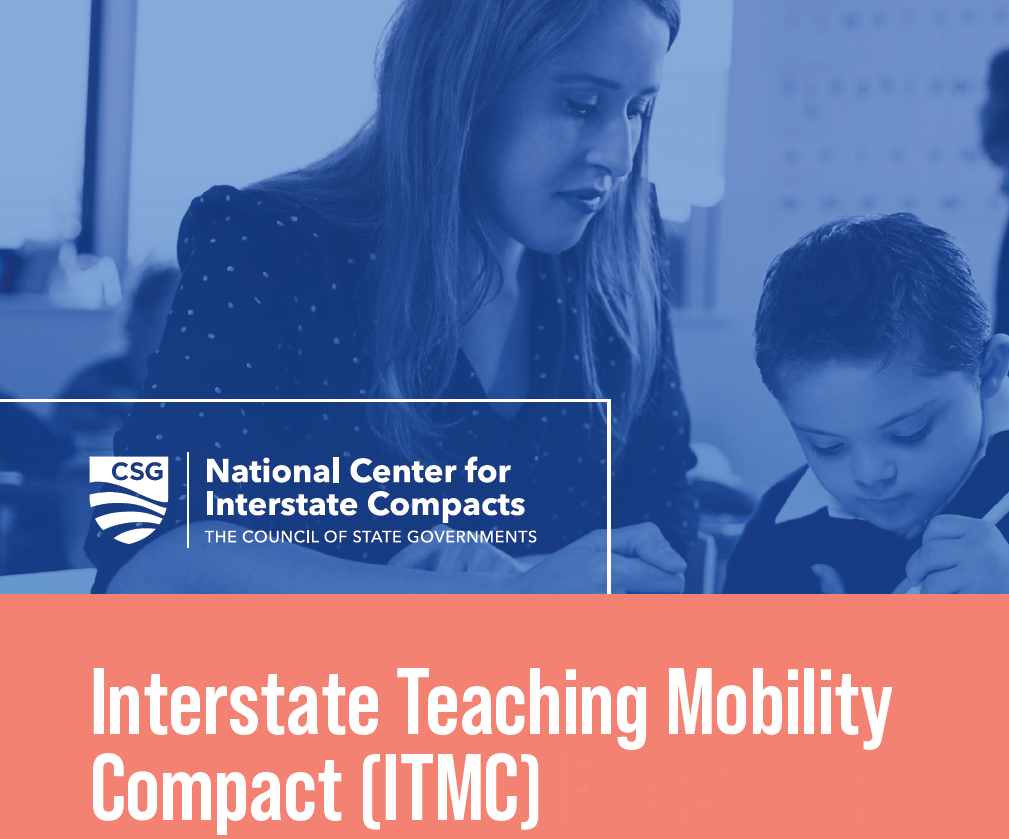
CSG Press Release: Interstate Teacher Mobility Compact Enacted
Allowing Streamlined Licensing Pathways for Educators in 10 States
|
|
|
|
|
|
|
|
|
|
Licensing for the roughly 3.7 million teachers in the country has historically been a system with unclear barriers between states, making it difficult for educators to relocate and attain a teaching license in another state. Military spouses are particularly impacted by these limitations — they move residences between states frequently as their spouses are relocated to various posts and are often met with licensing barriers.
Recognizing these obstacles, in 2020 the Department of Defense entered into a cooperative agreement with The National Center for Interstate Compacts at The Council of State Governments. Authorized by Congress in the 2020 National Defense Authorization Act, the cooperative agreement provides funding for the development of up to ten new occupational licensure compacts. A compact for teachers was a priority for the Department of Defense.
Model legislation to join the Interstate Teacher Mobility Compact was released to states in November 2022 after more than a year of development, public comment and stakeholder review. In June, Oregon joined nine other states — Colorado, Utah, Kentucky, Oklahoma, Kansas, Florida, Alabama, Nebraska and Nevada — in fully enacting the compact legislation. With the addition of this tenth state, the compact became active — the fastest occupational licensure compact to do so.
"A military spouse shouldn’t have to choose between supporting their family and pursuing their profession. Thankfully, states are working together to ensure they won't have to,” said David Adkins, executive director/CEO of The Council of State Governments.
“The ten states that have already enacted the Interstate Teacher Mobility Compact are reducing barriers to mobility for licensed teachers, and that’s good news to the many teachers in military families who will move to those states. CSG is proud to work with state officials and honored to partner with the U.S. Department of Defense to help create new tools to support military families. We look forward to continuing to be a resource for the ITMC Commission and its member states."
Maintaining state sovereignty is one of the cornerstones of the Interstate Teacher Mobility Compact. The compact does not alter member states’ ability to regulate the teaching profession or teacher licensure. Member states take on some responsibility to grant licenses to out-of-state teachers, but any standing pathways to teacher licensure within the state will remain in place.
Addressing Teacher Shortages
While districts across the country are facing widespread teacher shortages, the Teacher Mobility Compact streamlines the systems of licensure mobility in member states.
“Teachers who relocated can find it difficult to navigate the waters of license issuance in a new state,” said Jimmy Adams, executive director of the National Association of State Directors of Teacher Education and Certification. “Many of these are professionals with years of experience who decide to leave the profession because of the barriers they confront.”
The teaching compact utilizes a different model than other interstate occupational licensure compacts. Compact member states submit licenses that are eligible for the compact and meet a set of criteria outlined in the legislation. To be eligible, a license must require a bachelor’s degree and completion of a state-approved program for teacher licensure like a teacher preparation program at a college or university. Teachers holding a compact-eligible license can apply for licensure in another member state and receive the closest equivalent license without submitting additional materials, taking state-specific exams or completing additional coursework.
This compact maintains each member state’s standards while recognizing the professional who holds this high-level license,” Adams said. “This compact will keep many teachers in the profession who may otherwise leave.”
Next Steps
Later this year, the compact member states will nominate their commissioners and the first meeting of the Interstate Teacher Mobility Compact Commission will be held to draft the bylaws and rules of the compact.
Currently, several states are still considering legislation to join the teaching compact. Those who join will also be included in this meeting if the legislation is passed before the first convening.
For more information about the Interstate Teacher Mobility Compact or to view the model legislation, visit teachercompact.org. To learn more about the National Center for Interstate Compacts and other occupational licensure compacts, visit compacts.csg.org.
About Occupational Licensure Interstate Compacts
Occupational licensure compacts create reciprocity between states while maintaining the quality and safety of services and protecting state sovereignty. Compacts result in a more efficient distribution of licensed workers by supporting practitioner mobility.
|
|
|
|
|
|
|
|
|
|
|
|
|
|
|
|
|
|
|
|
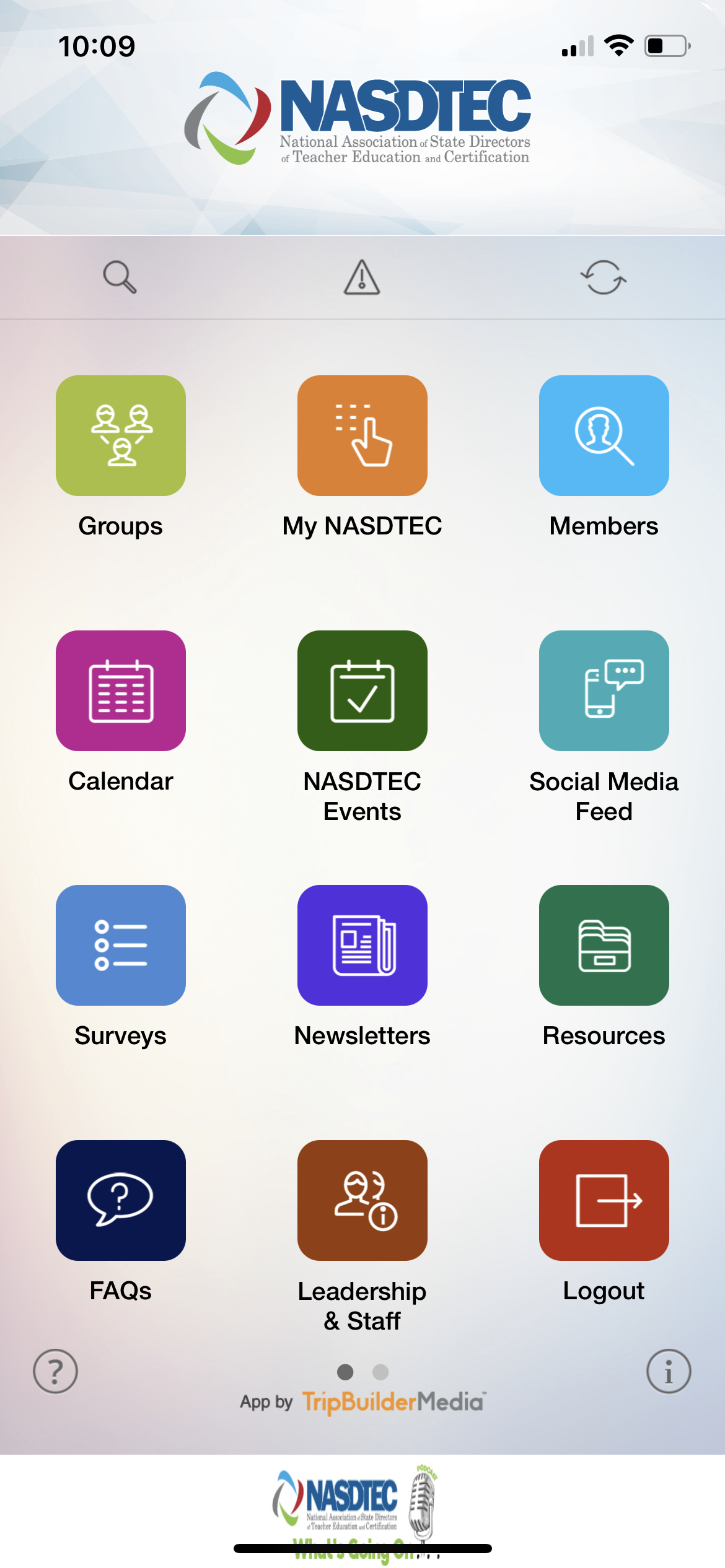
We are excited to announce the User Groups for NASDTEC members are now available within the Mobile App! User Groups allow members to pose questions, respond appropriately, and support each other in the work. Download directions for joining here. These directions can also be accessed within the Mobile App under the FAQ module.
Self-selected user groups currently available are:
- Educator Preparation
- Alternative Certification Pathways
- Grow Your Own Programs
- Rural Teacher Pipelines
- Teacher Retention and Recruitment
- Licensure
- Educator Ethics and Conduct
- Cyber Traps for Educators
- Educator Conduct Investigators
Each group has a moderator who may pose questions and discussion topics from time to time.
Sign up now and start meeting other NASDTEC members who do similar work as you.
|
|
|
|
|
|
|
|
|
|
|
|
|
|
|
|
|
|
|
|
|
|
|
|
|
|
|
|
|
|
|
|
|
|
|
Registration for the 26th Professional Practices Institute is Now Open!
|
|
|
|
|
|
|
|
|
|
Make plans now to join us in Providence, RI, on October 18-20, 2023, at the Renaissance Hotel!
|
|
|
|
|
|
|
|
|
|
|
|
|
|
|
|
|
|
|
|
|
|
|
National Convening on Registered Apprenticeships in Teaching Request for Presentation Proposals
|
|
|
|
|
|
|
|
|
|
NASDTEC and the National Center for Grow Your Own is proud to announce the first National Convening on Registered Apprenticeships in Teaching. This event will be held January 25 & 26, 2024, at the St. Anthony Hotel in San Antonio, TX.
To broaden the scope of topics and areas of interest related to National Convening on Registered Apprenticeships in Teaching planning committee embraces the opportunity to solicit proposals from all interested parties. You may be someone just getting started or are the resident expert in your state. We need and want to hear from your work, experiences, roadblocks and successes. Those selected will have the opportunity to present a 45-minute concurrent session and/or the committee may ask related presenters to serve on a panel presentation during one of the concurrent time blocks.
Presentations must be designed to engage audiences in rich discussion and collaboration regarding planning, funding, implementing and growing Registered Apprenticeship programs. These topics may include both research in this field as well as current successful practices within a state/jurisdiction, educator preparation institution, school district and labor.
- Planning Phase: first steps, potential partnerships, the right questions to be asking, funding
- Implementing Phase: application filing, what's next after becoming registered, funding
- Next Steps Phase: lessons learned, changes that need to be considered, sustainability and funding
Proposals must be submitted by the close of business, August 15, 2023. Concurrent session selections will be announced by mid-September 2023.
NOTE: Presenters are responsible for conference registration, hotel, travel and other expenses to attend the conference.
Please use the button below to submit a presentation proposal.
|
|
|
|
|
|
|
|
|
|
|
|
|
|
K12 Cybersecurity: Bracing for the Fall
August 10th at 11:30 AM ET
|
|
|
|
|
|
|
|
|
|
|
|
|
|
|
|
Previously recorded webinars from this series can be found on the NASDTEC website. Simply log into the site, from the main webpage, select Papers and Webinars under the Resources menu item.
|
|
|
|
|
|
|
|
|
|
|
Join Frederick Lane for his upcoming webinar, "K12 Cybersecurity: Bracing for the Fall," in which he describes the essential steps that administrators and educators should take to ensure that their schools are secure for the upcoming school year. As schools rely more and more on digital technologies for teaching and learning, they are becoming increasingly vulnerable to cyberattacks, data breaches, and other security threats. This 30-minute webinar will provide you with practical strategies and best practices to help you assess and strengthen your school's cybersecurity posture, so you can better protect your students, staff, and stakeholders from the potential risks of digital technologies. The price of digital technology is eternal vigilance, so don't miss out on this vital discussion!
|
|
|
|
|
|
|
|
|
|
|
|
|
|
|
|
|
|
|
|
|
|
|
|
|
What's Going On...New Season Coming Soon!
|
|
|
|
|
|
|
|
|
|
We are recording episodes for season 3 of What's Going On... and we want to hear from you. Everyone has tremendous work going on that NASDTEC members want to hear. Consider your current initiatives, new or ongoing, within your state, school district or preparation program and contact Jimmy Adams to be a guest.
|
|
|
|
|
|
|
|
|
|
|
|
|
|
|
|
|
|
|
|
|
|
|
|
|
|
Draft Strategic Plan Feedback Survey
|
|
|
|
|
|
|
|
|
|
The NASDTEC Executive Board is seeking your feedback on its draft strategic plan which outlines the key initiatives and goals for National Association of State Directors of Teacher Education and Certification to further its mission of promoting high standards in educator preparation, licensure, and professional practices, by convening educational partners, advocating for the profession, and disseminating valuable resources. Read the draft here.
This survey will remain open until August 1, 2023.
|
|
|
|
|
|
|
|
|
|
|
|
|
|
|
|
|
|
|
|
|
Job Position Announcements
|
|
|
|
|
|
|
|
|
|
|
|
|
|
Arizona State University-West
Professional Licensure Officer
|
|
|
|
|
|
|
|
|
|
The Professional Licensure Officer for Mary Lou Fulton Teachers College (MLFTC) will be responsible for guiding professional certification and licensure operations that impact education-related degree students from all 50 United States plus its territories. Duties will include ensuring that undergraduate and graduate professional licensure-related academic programs meet the regulatory requirements set forth by state and federal bodies for educator credentialing.
This position is located at the Tempe campus, but MLFTC welcomes applicants from anywhere in the United States. Remote work location may be considered for qualified candidates, per ASU policy.
|
|
|
|
|
|
|
|
|
|
|
|
|
|
|
|
|
|
|
|
|
|
|
Board Update from its June 9, 2023, Meeting
|
|
|
|
|
|
|
|
|
|
This is an update of the discussion and actions taken by the NASDTEC Executive Board during their recent meeting. This is an unofficial document intended to inform and update NASDTEC members of the work of the Executive Board. Minutes of all Board meetings may be accessed through the NASDTEC website once approved by the Board.
In the report of the NASDTEC President, Becky Pitkin thanked Board for the dedication to NASDTEC and commitment to the work, acknowledging that they do this work for no compensation. However, they don’t hesitate to do what is necessary for the betterment of the organization and the teaching profession.
Executive Director Jimmy Adams gave an update of the work he has been conducting for NASDTEC and with various groups and activities related to the organization. He reported that the Interstate Teacher Mobility Compact (ITMC) has 8 states for which their respective governors have signed the compact into law. Two (2) states are near completion for their governors’ signature. He reported that the Annual Conference has 261 registrants which includes speakers, getting us back to pre-pandemic levels and may be a record attendance. He thanked the regional directors and Anne Marie Fenton for their work with the Forward Fund and the selected recipients. He stated that the Professional Education Committee (PEC) is planning for the 1st National Convening on Registered Apprenticeships in Teaching in partnership with the National Center for Grow Your Own to be held on January 25 – 26, 2024, in San Antonio, TX at the St. Anthony Hotel. The official announcement will be made on Sunday, June 11th during the welcoming session at the Annual Conference. He stated that the National Council for the Advancement of Educator Ethics (NCAEE) has completed their charter which will be discussed later in the meeting by the Board. He reported that the mobile app currently has 166 users and that self-Selected Groups of Interest had a target date of June 6th, but has been delayed slightly and should be released soon. These groups will allow NASDTEC members to join topical discussion groups in which they are interested, to broaden communication between members. The “What’s Going On…” has completed its second season with 18 episodes. Seven (7) episodes have been recorded and ready for the third season of “What’s Going On…” to be released this fall. Season three will have 18 episodes, with each podcast being released every other week on Tuesdays. There have been 892 downloads.
Written regional reports were submitted by Brian Devine (Northeast), Shavon Harris (Southern), Krista Ried (Central), and Colleen O’Neil (Western). All regions are meeting regularly to discuss concerns and issues. In these reports the Board heard about topics that included ITMC, other licensure mobility and renewal issues, recruitment, residency programs, science of reading, educator salaries, registered apprenticeships, upgrading technology for license issuance, and educator assessments.
Quinton Dale updated the Board on the activities of the Profession Practices Committee talking about the 2023 Professional Practicing Institute (PPI) which will be held in Providence, RI, from October 18th to the 20th. Selection for concurrent session presentations is currently being conducted. The PPC will release the draft agenda on or around July 1st along with registration opening.
Robert Hagerman updated the Board on the work of the PEC. The committee meets monthly. They have conducted two webinars and will have four this coming academic year. He reported that the “Parking Lot” conversations following the webinar are very popular and continue to grow. He reported that the Registered Apprenticeship in Teaching national convening is planned for January 25-26, 2024, in San Antonio, TX (one day and a half). It is a co-sponsored event with NASDTEC and the National Center for Grow Your Own. David Donaldson is working on securing national speakers. Plans include a three-strand event with general sessions and predominantly audience-driven (main modality is audience participation/engagement rather than lecture/panel style).
Scott Gordon, chair of the Ad-hoc Committee on Model Anti-Grooming Legislative Language, submitted a written report on their work that stated the “draft model legislation has received quite a bit of valuable feedback from the survey sent to members earlier this year. The comments were overwhelmingly supportive of the concept with a few suggestions for tweaking the proposed language. A similar survey will be sent to attorneys that represent state education agencies for additional feedback.”
Lynn Hammonds, Director of PESBA, gave an update of the work of PESBA which included their spring Zoom meeting on April 10, with thirty-eight representatives from member states participating. Panelists with experience in the US Department of Labor Registered Apprenticeship Program application process shared their successes and challenges. She also reported that PESBA held elections for the 2023-2024 school year in May. Jeff Briske (NV) is the president, Anne Marie Fenton (GA) vice president, and Linnea Bradshaw (DE) is the member-at-large. She also thanked the outgoing officers, Becky Pitkin and Erica Hernandez-Scott, for their commitment and work. She shared that PESBA will hold its winter meeting in conjunction with the National Convening on Registered Apprenticeships in Teaching.
A report from the NCAEE was given by Anne Marie Fenton. NCAEE has two new logos for the Council. There is a new logo for MCEE as well to accompany the MCEE 2nd Edition which is expected to be available during the annual conference. The Council will release a new website in the early fall. Ms. Fenton presented the newly developed NCAEE Charter to the Board and encouraged their approval. The structure of the Charter is very similar to NASDTEC’s other special committee, PESBA.
Ms. Fenton also updated the Board on the NASDTEC Forward Fund. She reported that all recipients will be participating in the annual conference. The recipients are:
- Central Region: Owen Bondono, Teacher, 11th grade English, Oak Park High School, Oak Park Schools, Oak Park, Michigan
- Western Region: Connie Hall, Teacher, Kindergarten, Diedrichsen Elementary School, Washoe County School District, Reno, Nevada
- Northeast Region: Lisa Leaheey, Teacher, Secondary English, North Providence High School, North Providence, Province, Rhode Island
- Southern Region: Candice Neal Price, Teacher, 7th Grade Science, Charles R Drew Charter School- Junior Academy, Atlanta Public Schools, Atlanta, Georgia
The Forward Fund soft launch campaign for 2024 will start at the Annual Conference with the opportunity to contribute during the luncheon.
In discussion items the Board talked about the Executive Director evaluation process and aligning it to the strategic plan, the results of the 2023 Membership Satisfaction Survey, the ITMC and potential needs when the Compact becomes active, the draft strategic plan, and topics for the regional meetings related to the annual conference.
In action items the Board approved the NCAEE Charter. Given that the Executive Board is in the process of developing a strategic plan and requesting membership feedback, the Board approved the following goal with the related objective to present at the NASDTEC Annual Business meeting for approval.
Goal: Complete the strategic plan after an opportunity for membership feedback and develop a biennial budget based on that strategic plan.
Objective: To make an informed decision on the budget of the organization to meet its new goals from the strategic plan.
|
|
|
|
|
|
|
|
|
|
|
|
|
|
|
|
|
|
The information shared in this section is a review of news items from across the country. It is not exhaustive by any means, but is designed to assist those who work in educator licensure, conduct and/or policy.
|
|
|
|
|
|
|
|
|
|
|
|
|
|
|
|
|
|
|
|
|
|
|
Supreme Court’s Affirmative Action Ruling Leaves Colleges Looking for New Ways to Promote Diversity
|
|
|
|
|
|
|
|
|
|
Leaders of scores of universities said Thursday that they were disappointed by what they see as a blow to diversity. Yet many also voiced optimism that they would find new ways to admit more Black and Hispanic students, despite evidence that eliminating the practice often leads to steep enrollment decreases among them.
|
|
|
|
|
|
|
|
|
|
|
|
|
|
|
U.S. Department of Labor Approves Registered Apprenticeship for K-12 Principal
|
|
|
|
|
|
|
|
|
|
On July 10, 2023, the U.S. Department of Labor approved the “K-12 principal” occupation as eligible for registered apprenticeship based on an application submitted by the North Dakota Department of Public Instruction and written by the National Center for Grow Your Own. This application is the first-in-the-nation to receive approval.
|
|
|
|
|
|
|
|
|
|
|
|
|
|
|
California Decided to Add a New Grade to Public Schools. How Is It Going?
|
|
|
|
|
|
|
|
|
|
In 2021, California legislators approved a plan to provide universal prekindergarten (UPK) to all 4-year-olds and income-eligible 3-years-olds in the state within five years, committing to provide UPK at a pace and scale unprecedented in the United States. In a new blog, “California Decided to Add a New Grade to Public Schools. How Is It Going?,” authors Hanna Melnick and Melanie Leung-Gagné find encouraging signs that districts’ UPK implementation may be off to a promising start.
|
|
|
|
|
|
|
|
|
|
|
|
|
|
|
|
|
|
|
|
|
|
|
|
|
|
|
Announcements and information released from other educational organizations.
|
|
|
|
|
|
|
|
|
|
|
|
|
|
|
|
New Resources from CEEDAR
|
|
|
|
|
|
|
|
|
|
NEW RESOURCES FROM THE CEEDAR CENTER! Learn about the evolution of Culturally Relevant Education in CEEDAR's new PD Pack, and practice implementing HLPs with the two-part Lesson Study PLO.
|
|
|
|
|
|
|
|
|
|
|
|
|
|
|
|
|
IES and Accelerating Learning Recovery
|
|
|
|
|
|
|
|
|
|
That’s according to the recent release of NAEP’s long-term trend report on the math and reading scores of 13-year-old students in the United States, which adds the finishing touches to NAEP’s current cycle of reports showing just how harmful the COVID-19 pandemic was to student achievement. As reported widely, scores fell dramatically across the entire population of 13-year-olds and across just about every subgroup of students NAEP reports on. The depth of the learning losses that NAEP and other assessments have documented shows that learning recovery is the key task facing educators and policymakers today. Here are several avenues IES is pursuing to help speed recovery.
|
|
|
|
|
|
|
|
|
|
|
|
|
|
|
From New America: National Scan of Pathways to Becoming a First-Time Teacher
|
|
|
|
|
|
|
|
|
|
New America's new interactive data visualization tool on understanding the national landscape of state policies for becoming a first-time teacher is now live!
|
|
|
|
|
|
|
|
|
|
|
|
|
|
|
|
|
|
|
|
|
Thank You to Our Partners and Sponsors!
|
|
|
|
|
|
|
|
|
|
|
|
|
|
|
|
|
|
|
|
|
|
|
|
|
|
|
|
|
|
|
|
|
|
|
|
|
|
|
|
|
|
|
 Print Page